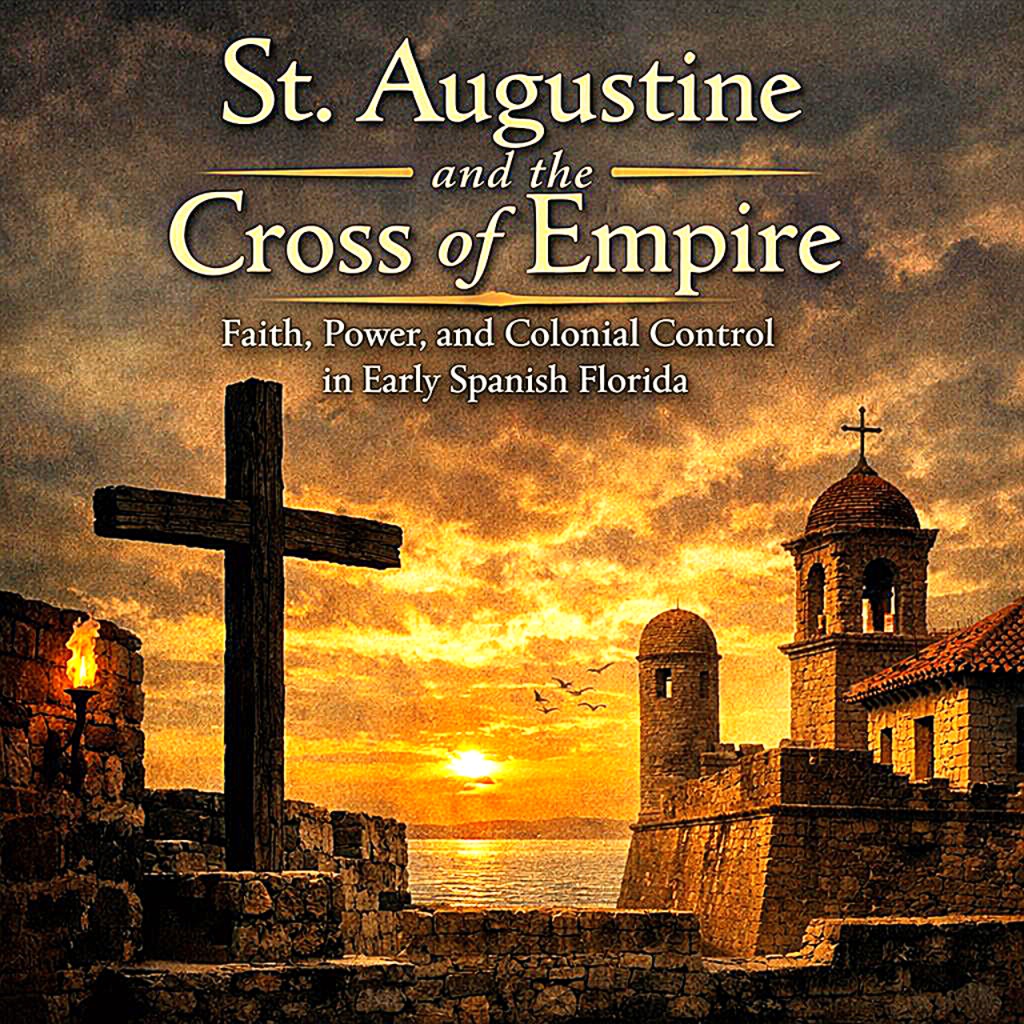
St. Augustine and the Cross of Empire
Faith, Power, and Colonial Control in Early Spanish Florida
by: D. E. McElroy
When Spanish ships anchored off the Florida coast in 1565, they did not arrive with soldiers alone. They arrived with priests, crucifixes, royal decrees, and a worldview in which faith and empire were inseparable.
St. Augustine was not simply a settlement. It was a statement. Catholic identity was not merely spiritual—within the Spanish imperial imagination, it was political loyalty and social order. To stand outside the Church was to stand outside the framework that organized life, law, and legitimacy.
A Colony Built on Faith and Allegiance
St. Augustine was founded as both a military outpost and a missionary frontier. Spain’s rivals threatened its claims in the New World, and Catholicism became a binding agent of control. Loyalty to the Crown meant loyalty to the Church, and religious conformity was expected as a stabilizing force.
Florida did not host a permanent Inquisition tribunal like those based in major centers of the Spanish world. Yet the colony still lived within a civilization shaped by Inquisition-era logic: unity through orthodoxy and authority through faith.
The Mission System: Salvation and Submission
Franciscan missionaries established missions among Indigenous communities throughout Florida. The stated purpose was salvation. The practical outcome was cultural transformation.
Conversion meant more than prayer. It often required the reorganization of village life, the suppression of traditional spiritual practices, and incorporation into colonial labor and administrative systems. For some Native groups, alliance with Spain offered protection against rivals and raiders. For others, mission life brought disruption, population loss through disease, and the erosion of ancestral identity.
The Shadow of the Inquisition
Although Florida did not contain a full Inquisition court, it operated under a worldview that treated religious unity as a pillar of public order. In a frontier settlement where survival was fragile, authority was immediate. The governor commanded military power. The priest guided moral and spiritual life. Both served the Spanish Crown.
Colonial punishment could be severe by modern standards, including corporal discipline and execution for rebellion or treason. Because religion and allegiance were intertwined, dissent could easily be interpreted as both political defiance and spiritual error. In that sense, the Inquisition’s spirit—if not its machinery—reached the colony.
Faith as Order
In the sixteenth and seventeenth centuries, the modern idea of separating church and state did not yet exist. Leaders commonly believed that a divided faith produced a divided society. Enforcing orthodoxy was framed as stability and protection.
Yet when spiritual authority merges with civil power, conscience becomes vulnerable. The question is not whether individuals were simply “good” or “evil,” but how easily sincere conviction can justify coercion—especially when power presents itself as sacred.
Companion Section: Spanish, English, and French Colonial Religious Control
St. Augustine becomes clearer when set beside other colonial powers. Spain was not alone in blending religion and empire; differences lay in structure, scale, and local practice.
Spanish colonies treated Catholicism as the unifying identity of empire. Church and Crown reinforced one another, conversion was official policy, and dissent could be viewed as disloyalty.
English colonies, though Protestant, also enforced conformity in certain places. Some settlements pursued religious purity and punished dissenters, while other colonies evolved toward greater pluralism over time.
French colonies often tied Catholic missions closely to imperial expansion as well, sometimes operating with smaller settler populations and greater reliance on Indigenous alliances—conditions that could soften enforcement in frontier settings without eliminating it.
Across empires, religion legitimized authority. Spiritual unity was treated as political stability. Indigenous spiritual systems were typically judged inferior or targeted for replacement. The ideal of broad religious freedom emerged only later.
Closing Reflection
St. Augustine is now a historic city of fortifications and courtyards. Yet its early history carries a deeper lesson: when belief becomes political currency, faith can inspire compassion and also enforce conformity.
The Spanish
Inquisition may not have built permanent tribunals in Florida,
but a related worldview traveled there—unity through
orthodoxy, loyalty through belief, order through sacred
authority. The enduring question remains: how can a
society honor faith without coercing conscience?
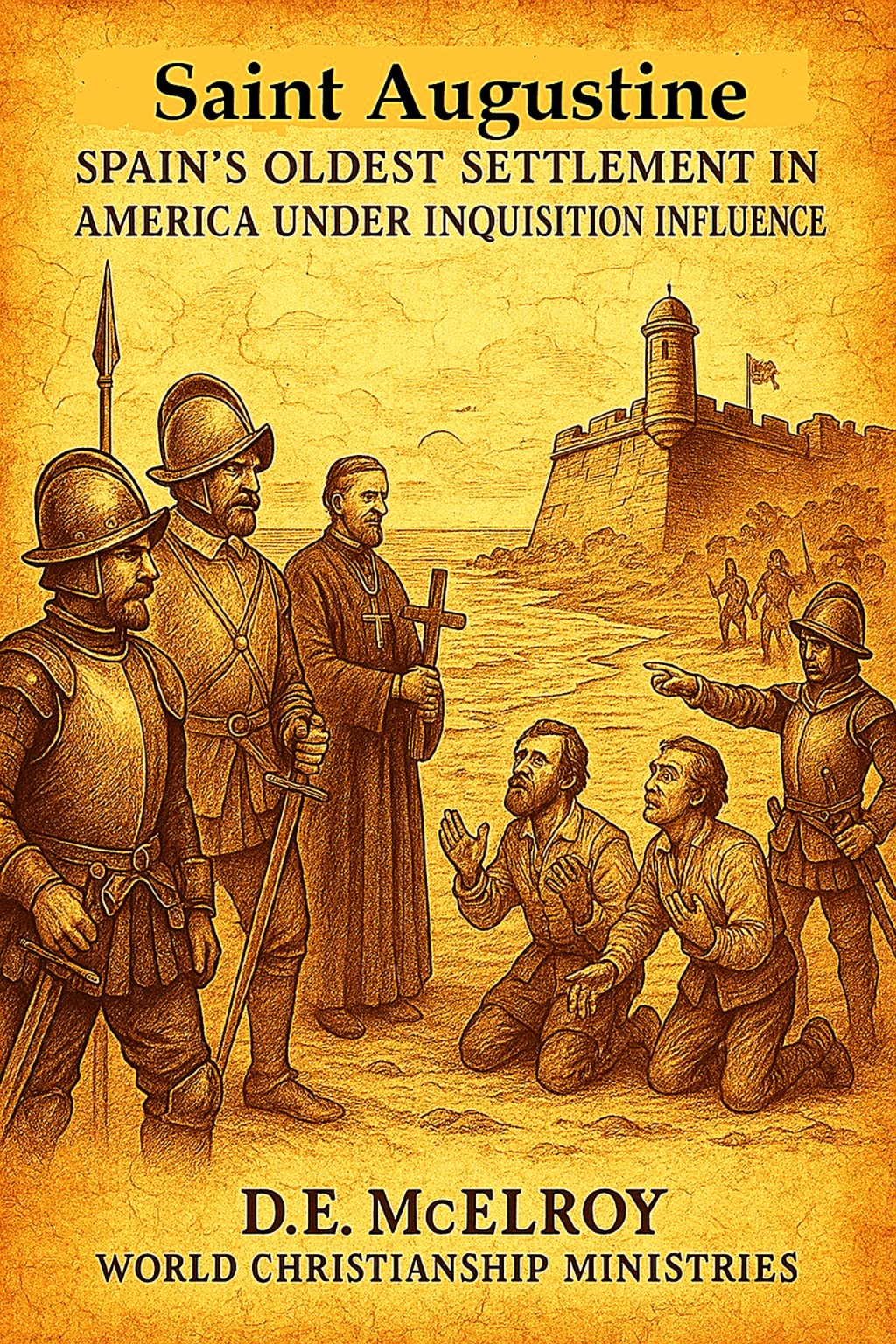
Note: This mini book is a
historical reflection intended to illuminate the relationship
between colonial governance and religious authority. It is not
a comprehensive academic history, but a concise, readable
evaluation in narrative form.